Courtesy Photo
SDG – As plans for Canada’s first high-speed rail network continue to advance, supporters and opponents of the proposed Alto project remain firmly entrenched in their positions.
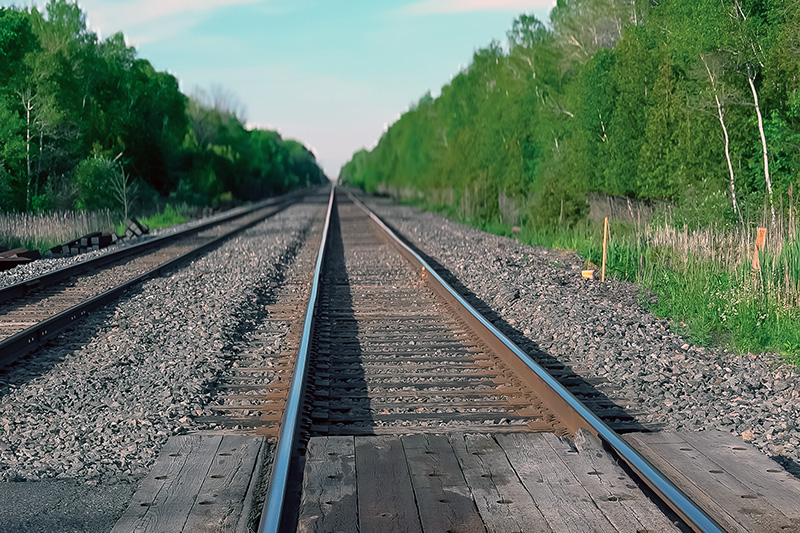
The proposed rail line would connect Quebec City, Trois-Rivières, Montreal, Ottawa, Peterborough and Toronto through a dedicated passenger rail corridor stretching approximately 1,000 kilometres across the country’s most densely populated region. Trains would travel at speeds of up to 300 kilometres per hour, reducing travel times between major centres. Travel between Toronto and Montreal, for example, could be cut from approximately six hours to about three.
What has become increasingly clear in recent months is that while there are some potential benefits of high-speed rail, there is growing disagreement over where the line should be built, who should bear the impacts, whether the projected benefits justify the cost, and how many would actually see a real benefit.
The project remains in the design and development phase. Ottawa has committed $3.9 billion to planning, engineering, environmental studies, Indigenous consultation and route selection. Estimates for construction of the full network generally range between $60 billion and $90 billion, although critics have suggested the final cost could be significantly higher.
Since Alto was formally launched in February 2025, the project has moved steadily through its consultation and planning stages. Public consultations concluded this spring, drawing thousands of submissions from municipalities, landowners, environmental groups and agricultural organizations. Alto officials have said a more precise corridor proposal is expected this fall, with route refinement continuing before any final alignment is selected.
On Monday, June 22 Transport Minister Steven MacKinnon, speaking in Kingston said the government has directed Alto to consider an additional stop in Kingston, something that feedback from residents indicated was strongly preferred. “This is a strong indication of preference for one route over another,” said Minister MacKinnon in Kingston, although he stressed that no final decision has been made.
The federal government has also enacted the High-Speed Rail Network Act, legislation designed to establish a regulatory framework and streamline development of the project.
Supporters argue the project would modernize passenger transportation in Canada, reduce greenhouse gas emissions, lessen dependence on automobiles and short-haul flights, and strengthen economic ties between major urban centres.
Critics, however, continue to question the project’s cost, ridership projections and impact on rural communities, particularly those in eastern Ontario and western Quebec, upon whom the project would have the greatest impact, and the least benefit.
Nowhere has that opposition been more evident than within the agricultural community.
The Ontario Federation of Agriculture, the Canadian Federation of Agriculture and Quebec’s Union des producteurs agricoles have all raised concerns that potential corridors could affect some of the most productive agricultural land in Ontario and Quebec. Farm organizations have warned that the project could fragment farmland, disrupt drainage systems, interfere with the movement of livestock and equipment and, in some cases, threaten the long-term viability of family farming operations.
The concern is particularly acute in Eastern Ontario, where large sections of the study corridor pass through active agricultural areas.
Municipal opposition has also become more organized.
Earlier this year, the Eastern Ontario Wardens’ Caucus formally opposed Alto in its current form, citing concerns over inadequate consultation, uncertain impacts on rural communities and potential environmental consequences. Several municipalities across the corridor have passed similar resolutions while calling for greater transparency and a stronger voice in route selection.
Among those expressing concern is North Dundas Mayor Jamie MacDonald, who recently outlined several issues he believes require greater attention before the project proceeds.
“First, Alto threatens some of the most productive agricultural land in our region,” said MacDonald. “Farms that have been built over generations could be severed by the rail corridor, disrupting operations and reducing productivity.”
MacDonald also pointed to concerns surrounding wetlands, wildlife habitat and local transportation networks, as well as the possibility that rural communities could experience the impacts of the project without receiving direct service from it.
“Most communities in the corridor will not have a station or a stop,” he said. “At the same time, there are concerns that existing VIA Rail services in rural communities, such as ours, could be reduced or eliminated.”
Transparency has become a recurring theme among municipal leaders. Several councils have objected to confidentiality agreements associated with portions of the consultation process, arguing that residents deserve access to information that could affect their communities for generations.
Alto officials maintain that no final route has been selected and that public feedback is being incorporated into the planning process. The organization has also emphasized that the current study corridors are significantly wider than the eventual rail line and that efforts are being made to reduce impacts on communities, farmland and environmentally sensitive areas.
For now, the debate remains largely theoretical. Property acquisition and expropriation cannot occur until a final route is selected, and construction is not expected to begin until the latter part of the decade.
Yet as the project moves closer to that reality, the discussion is becoming more focused. What began as a collection of individual concerns has evolved into a coordinated effort by municipalities, farm organizations and residents seeking a greater role in determining how – and where – one of the largest infrastructure projects in Canadian history ultimately takes shape.
Whether Alto eventually becomes a symbol of national progress or a cautionary tale about balancing public benefits with local impacts may depend on how successfully those two tracks can be brought closer together. At the present time, it appears as British author Rudyard Kipling wrote many years ago, “Never the twain shall meet.”