EASTERN ONTARIO – As temperatures rise and outdoor work increases across Eastern Ontario, so does the risk of exposure to ticks and the diseases they can carry. Farmers, agricultural workers, custom operators, forestry workers, and rural families spend significant time in fields, woodlots, fence lines, pastures, and overgrown areas where ticks thrive.
Over the past decade, tick populations—particularly the blacklegged tick (also known as the deer tick)—have expanded throughout Eastern Ontario. With this expansion comes an increased risk of Lyme disease and other tick-borne illnesses. For agricultural operations, awareness and prevention are critical to protecting workers, family members, and the long-term health of the farm business.
Why ticks are a growing concern
Ticks are commonly found in:
- Tall grass and brush
- Woodlots and forest edges
- Fence rows and hedgerows
- Pastures and grazing areas
- Areas frequented by deer, rodents, and wildlife
Unlike mosquitoes, ticks do not fly or jump. They wait on vegetation and attach to people or animals that brush past them.
Farm workers are particularly vulnerable because many daily tasks involve working in habitats where ticks are common.
Protecting yourself while working outdoors
The best defense against ticks is preventing them from reaching your skin.
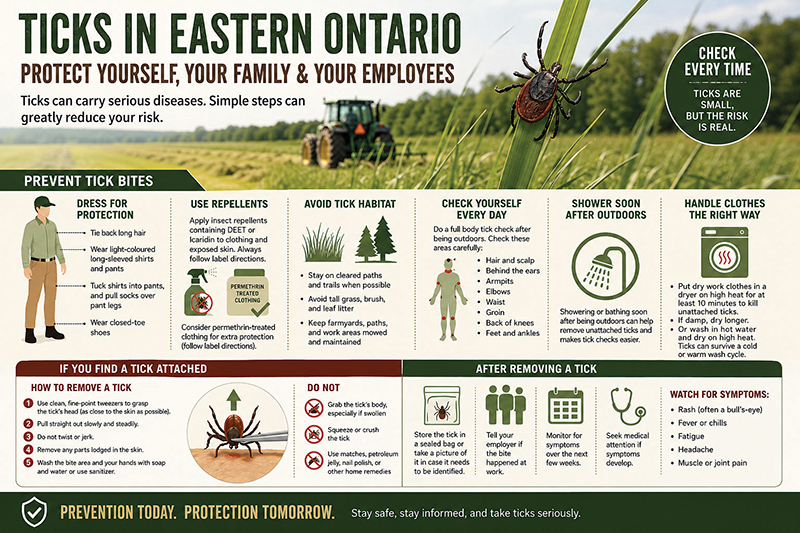
Dress for protection
When working in high-risk areas:
- Wear light-coloured clothing to make ticks easier to spot.
- Wear long-sleeved shirts and long pants.
- Tuck shirts into pants.
- Pull socks over pant legs.
- Wear closed-toe footwear.
- Tie back long hair.
Creating a physical barrier significantly reduces the chances of ticks reaching exposed skin.
Use repellents
Apply insect repellents containing:
- DEET, or
- Icaridin
Follow all label directions carefully.
Workers who spend extensive time in wooded or grassy environments may also consider permethrin-treated clothing, which can provide additional protection when used according to manufacturer instructions.
Avoid tick habitat when possible
While agricultural work often requires access to fields, bush lots, and overgrown areas, workers should:
- Stay on maintained paths where possible.
- Minimize unnecessary exposure to dense brush and tall grass.
- Keep farmyards and work areas trimmed and well maintained.
Daily tick checks are essential
One of the most effective ways to prevent tick-borne illness is performing a thorough tick check after outdoor work.
Inspect your entire body, paying special attention to:
- Feet and ankles
- Behind the knees
- Groin area
- Waistline
- Armpits
- Elbows
- Hair and scalp
- Behind the ears
Ticks can be very small, especially immature ticks, making careful inspection important.
Shower soon after outdoor work
Showering or bathing shortly after working outdoors can help:
- Remove unattached ticks
- Make tick checks easier
- Reduce the likelihood of a tick remaining unnoticed
This simple step can significantly lower the risk of exposure.
Handling work clothes properly
Ticks can hitch a ride home on clothing, creating exposure risks for family members.
After working outdoors:
- Place clothing directly into a dryer on high heat for at least 10 minutes to kill unattached ticks.
- Damp clothing may require a longer drying time.
- If washing clothing, use hot water followed by high-heat drying.
- Be aware that ticks can survive a cold or warm wash cycle.
These precautions help prevent ticks from spreading from the workplace to the home.
Protecting family members
Farm families often share the same environment as farm workers.
Parents should:
- Perform tick checks on children after outdoor play.
- Check pets regularly, as dogs and cats can bring ticks into the home.
- Encourage family members to wear appropriate clothing when hiking, hunting, or working outdoors.
- Keep lawns and play areas mowed and maintained.
Education is one of the best tools for reducing risk.
Employer responsibilities
Agricultural employers have a duty to protect workers from workplace hazards, including biological hazards such as ticks.
Employers should:
- Educate workers about tick risks and prevention.
- Provide appropriate personal protective equipment and repellents where necessary.
- Encourage daily tick checks.
- Develop procedures for reporting tick bites.
- Train workers on proper tick removal techniques.
- Maintain records of workplace exposures when required.
A proactive approach helps protect worker health and reduce potential lost-time incidents.
What to do if you find an attached tick
If a tick is attached to the skin, remove it as soon as possible. Prompt removal reduces the chance of disease transmission.
Proper tick removal
- 1. Use clean, fine-point tweezers.
- 2. Grasp the tick as close to the skin as possible, preferably by the head or mouthparts.
- 3. Pull upward slowly and steadily.
- 4. Avoid twisting or jerking the tick.
- 5. Remove any remaining mouthparts if possible.
- 6. Wash the bite area and your hands thoroughly with soap and water or sanitizer.
Do not
- Crush the tick.
- Squeeze its body.
- Grab a swollen tick by the abdomen.
- Use folklore remedies such as petroleum jelly, nail polish, gasoline, or matches.
These methods can increase the risk of infection.
After removing a tick
Once removed:
- Place the tick in a sealed bag or container.
- Consider taking a clear photograph for future identification.
- Inform your employer if the exposure occurred at work.
- Monitor for symptoms over the following weeks.
Watch for:
- A spreading rash
- Fever
- Fatigue
- Headaches
- Muscle or joint pain
If symptoms develop, seek medical attention promptly and inform your healthcare provider about the tick bite.
A farm safety issue worth taking seriously
Ticks have become a reality of rural life across Eastern Ontario. While the risk of exposure cannot be eliminated entirely, simple preventive measures can dramatically reduce the likelihood of tick bites and tick-borne disease.
For farm families and agricultural employers alike, the message is straightforward:
Dress appropriately, use repellents, conduct daily tick checks, remove ticks properly, and educate everyone who works or lives on the farm.
A few minutes of prevention today can prevent serious health complications tomorrow.