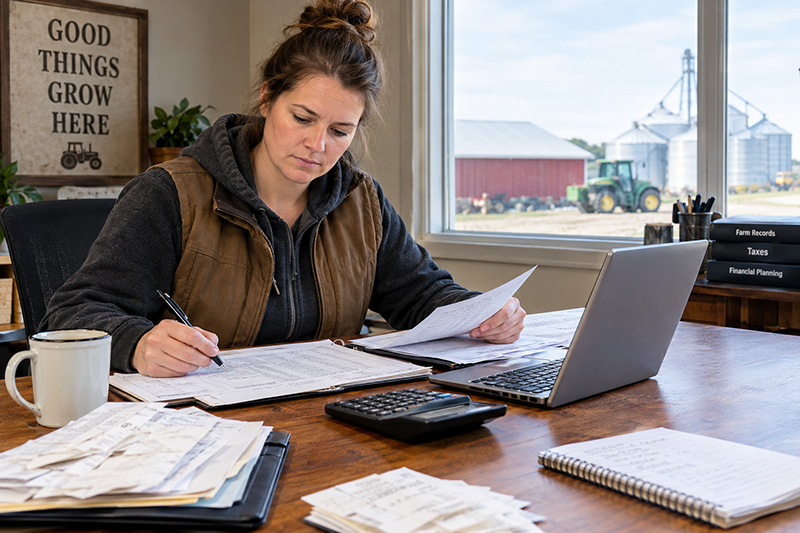
Courtesy Photo
As the harvest season winds down and another year begins drawing to a close, farmers and agricultural business owners have an excellent opportunity to take a closer look at their financial records. While year-end bookkeeping may not be at the top of the priority list after a busy growing season, taking some time now to catch up, reconcile accounts and review financial results can save considerable time, money and frustration when tax season arrives.
For many farm operations, bookkeeping is something that gets pushed aside during planting, haying and harvest. Receipts accumulate, invoices wait to be entered and bank reconciliations fall behind. However, waiting until the end of the year to sort everything out can make an already busy season even more stressful.
The good news is that there is still time to get organized, identify potential problems and make informed financial decisions before Dec. 31.
Start with your bank reconciliations
One of the most important steps in preparing for year-end is ensuring that all bank and credit card accounts are reconciled.
A reconciliation compares the transactions recorded in your bookkeeping system with those appearing on your bank or credit card statements. Ideally, this should be completed monthly, but if you have fallen behind, now is the time to catch up.
When reconciling, watch for duplicate transactions, missing deposits, unrecorded bank fees, interest charges and payments that may have been entered incorrectly.
Pay particular attention to outstanding cheques and deposits. A cheque showing as outstanding for several months may have been lost, cancelled or recorded incorrectly. Similarly, a deposit that has not cleared the bank should be investigated.
Do not simply make an adjusting entry to force your reconciliation to balance. Finding the actual difference is essential to ensuring your financial statements are accurate.
Remember that transfers between accounts should not be recorded as income or expenses. This is a common mistake that can significantly distort financial results.
Review your accounts receivable
Before year-end, take a close look at who owes your business money.
For agricultural operations, this may include outstanding invoices for custom work, crop sales, equipment rentals, trucking or other farm-related services.
Review your accounts receivable aging report and identify invoices that have remained unpaid for an extended period.
Are these amounts still collectible? Have customers made payments that were deposited but never applied to their invoices? Were credit notes issued but not recorded?
Following up on outstanding accounts now may improve cash flow before year-end.
It is also important to identify potentially uncollectible accounts and discuss them with your accountant. Bad debt write-offs must meet specific requirements and should not be recorded simply because an invoice is overdue.
Don’t forget accounts payable
Just as important as knowing who owes you money is knowing what your farm operation owes others.
Review outstanding supplier invoices, including feed, seed, fertilizer, chemicals, veterinary services, machinery repairs and other operating expenses.
Check whether invoices have been entered twice or whether payments have been recorded without being applied to the original bills.
An accounts payable report showing invoices that were paid months ago may indicate bookkeeping errors rather than actual outstanding debt.
Also, make sure invoices relating to the current financial year have been properly recorded, even if they will not be paid until the following year, where accrual accounting applies.
Accurate payables are particularly important when reviewing the financial position of a farm operation or preparing information for lenders.
Check your loans and equipment financing
Farm businesses frequently carry several types of financing, including mortgages, equipment loans, operating lines of credit and vehicle financing.
These accounts deserve special attention before year-end.
Review loan balances against statements from your financial institutions. One common bookkeeping mistake is recording an entire loan payment as an expense.
In most cases, the principal portion reduces the loan balance, while the interest portion is recorded as an expense.
If the full payment has been entered as an expense, both the income statement and balance sheet may be incorrect.
New equipment purchases, trade-ins and equipment sales should also be reviewed carefully.
Purchasing a tractor, combine or other major piece of equipment does not necessarily mean the entire purchase price is deductible as an operating expense. Capital asset and depreciation rules may apply.
Ensure purchase agreements, financing documents and trade-in information are available for your accountant.
GST/HST: A common area for errors
GST/HST is another area where bookkeeping discrepancies frequently appear.
Review your GST/HST accounts and compare the balances with returns already filed.
One issue to watch for is a difference between sales reported on GST/HST returns and income appearing on your profit and loss statement.
These differences may arise from timing, accounting methods, incorrectly coded transactions, missing entries or adjustments made after a return was filed.
Not every difference represents an error, but every unexplained difference should be investigated.
For farmers, it is particularly important to ensure that zero-rated agricultural sales are recorded correctly and that input tax credits are supported by appropriate documentation.
Remember that zero-rated sales are not the same as exempt sales, and the distinction can affect GST/HST reporting and recovery.
Review your farm income and expenses
Once accounts have been reconciled, take time to review your profit and loss statement.
Compare the current year’s results with the previous year.
Have fuel, fertilizer, feed or repair costs increased significantly? Are machinery expenses higher than anticipated? Has revenue from crop or livestock sales changed?
Look for unusual amounts, negative expense balances or transactions posted to incorrect accounts.
A large machinery repair may have been entered under supplies, or a personal purchase may have been charged to a farm expense account.
For farm operations, inventory and accounting methods also require attention. Depending on how farm income is reported, livestock, crops, purchased inventory and year-end inventory adjustments may affect taxable income.
Farmers using the cash method should discuss any applicable inventory adjustments and planning opportunities with their accountant.
Separate personal and business transactions
It is not unusual for farm owners to use the same accounts for both personal and business purchases, particularly in family-run operations.
However, these transactions must be identified and recorded correctly.
Personal expenses should not be included as farm operating costs simply because they were paid through the farm bank account.
Likewise, personal funds contributed to the operation should not automatically be treated as business income.
Taking time to review owner withdrawals, contributions and personal-use portions of expenses can prevent problems during tax preparation.
Use your numbers to plan ahead
Perhaps the greatest benefit of catching up on bookkeeping before year-end is the opportunity to make decisions while there is still time to act.
Reviewing financial statements now can help determine whether the operation is profitable, whether cash flow will be sufficient through the winter and whether major purchases or financing decisions should be considered.
It may also provide an opportunity to discuss tax planning with your accountant before the year closes.
However, purchasing equipment or supplies simply to reduce taxable income is not always a sound financial decision. Cash flow, financing costs and the applicable tax treatment should all be considered.
Make year-end easier
Good bookkeeping is more than preparing numbers for a tax return. It provides valuable information about the financial health of your farm operation.
By catching up on reconciliations, reviewing outstanding accounts, checking loan balances and examining income and expenses now, you can reduce the likelihood of unpleasant surprises later.
You will also make the work easier for your bookkeeper and accountant, potentially reducing the time required to prepare your year-end financial information.
As another agricultural year comes to a close, take the opportunity to give your financial records the same attention you give your equipment before putting it away for the season.
A little maintenance now can prevent much bigger problems down the road.
And when it comes to bookkeeping, knowing where your operation stands today is one of the best ways to prepare for a stronger financial year ahead.