Courtesy Photo
RIGAUD, QC – Farmers, landowners and residents from Eastern Ontario and western Quebec gathered Saturday to voice their opposition to the proposed Alto high-speed rail project, with concerns ranging from the loss of agricultural land to impacts on rural communities and property owners.
Several hundred people attended the Strong and United – Rassemblement Fort et Unis rally at Fermes Legault near Rigaud, Que., just across the Ontario border. The bilingual event included a tractor parade involving approximately 50 tractors decorated with anti-Alto signs, followed by speeches from farmers, municipal representatives and others opposed to the project. Other reports had anywhere from dozens to more than 250 tractors being involved. Video of the event would seem to indicate that the number was well over 100.
The gathering was organized by Alto-No and supporters from communities along the proposed rail corridor. Organizers said the event was intended to demonstrate that concerns about Alto extend beyond individual properties and municipalities and are shared by communities on both sides of the Ontario-Quebec border.
For farmers, one of the principal concerns is the potential loss or fragmentation of productive agricultural land.
Sam McDonell, an Ontario Federation of Agriculture provincial director and South Glengarry councillor, told the rally that farmland cannot simply be replaced if it is required for the rail project.
“You can’t eat a train,” McDonell said. “You can’t relocate a farm the way you relocate a station.”
There were several speakers at the protest, one of which was Carleton University associate Professor Ian Lee. “I think they’ve radically underestimated the capital cost using all the other projects that have been done in other countries,” said Lee.
“Secondly, they’ve radically overestimated the number of people who are going to use this train, if it’s ever built.”
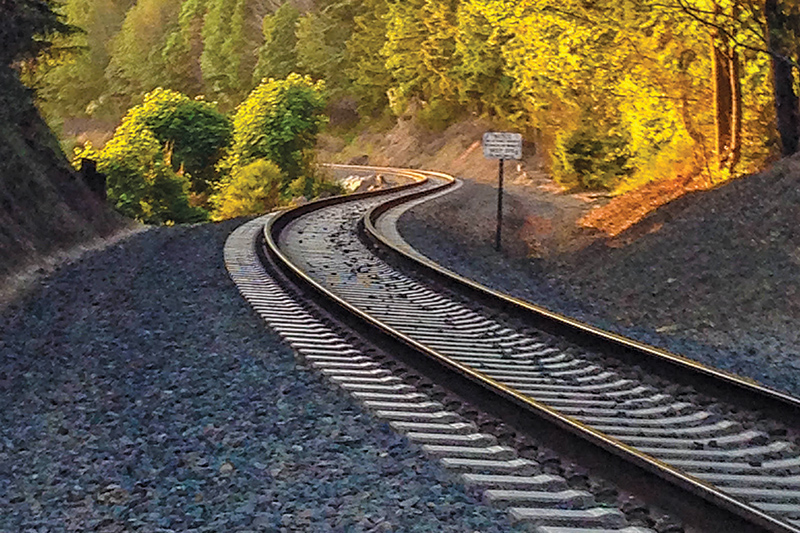
The proposed Alto corridor would connect Quebec City, Montreal, Ottawa and Toronto with dedicated passenger rail infrastructure. Alto describes the project as a fast, frequent passenger service intended to provide faster connections between major cities and communities along the corridor.
The project is expected to cross parts of Eastern Ontario, although the final alignment has not yet been released. Alto says further route refinement will provide more specific information about land requirements, access, crossings and compensation.
That uncertainty is a major concern for landowners who could be affected.
At Saturday’s rally, residents spoke about the possibility of farms being divided by the rail corridor, changes to road access and potential effects on rural communities.
Michel Lalonde, a former farmer from Chute-à-Blondeau, also expressed concern about the effect of the proposed railway on agricultural properties and rural real estate.
Farmers at the rally also questioned the economic case for the project and the amount of public money that could ultimately be required.
Alto has placed the estimated cost of the project at about $90 billion, according to reporting from Saturday’s demonstration. Opponents argued that the final cost could be higher and questioned whether the project would generate sufficient benefits to justify the investment.
The environmental effects of constructing a major rail corridor through agricultural and rural areas were another concern raised at the rally.
The concerns expressed at Rigaud come after months of growing opposition to Alto in Eastern Ontario.
Municipal organizations, including the United Counties of Prescott and Russell and the Eastern Ontario Wardens’ Caucus, have adopted resolutions expressing opposition or concern about the project. Eleven Eastern Ontario Progressive Conservative MPPs have also publicly called for greater consultation and protection of farmland.
The Eastern Ontario MPPs said communities affected by the project should have their concerns reflected in route planning and that any future rail project should minimize impacts on farmland.
Opposition organizers say they want governments to reconsider the project and provide greater information about its economic, agricultural, environmental and social impacts before proceeding.
Alto, meanwhile, continues to promote the project as a major transportation investment that would provide faster and more frequent passenger rail service between Quebec and Ontario. Its proponents argue that dedicated infrastructure is necessary to provide reliable high-speed service along the Quebec City-Toronto corridor.
The debate is expected to intensify as the proposed corridor becomes more clearly defined and affected landowners receive more information about potential land requirements.
For farmers and rural residents who attended Saturday’s rally, however, the issue is already personal.
Their concern is not simply where a railway might appear on a map, but how its construction could affect farms, homes, roads, businesses and communities that have developed over generations. The Sept. 19 rally demonstrated that opposition to the proposed route has become a cross-provincial issue, bringing together rural residents from Eastern Ontario and western Quebec who say they want a greater role in decisions that could permanently alter their communities.